An Honest Review of the Celeb & Plastic Surgeon-Beloved LYMA Laser

All products and services featured are independently chosen by editors. However, StyleCaster may receive a commission on orders placed through its retail links, and the retailer may receive certain auditable data for accounting purposes.
I think we can all agree that we’re in the golden age of at-home skincare. From red light masks that look like props from a sci-fi movie to high-frequency wands and ultrasound skin spatulas (yes, really), there’s a device for virtually every skin concern—and the tech just keeps getting better. Many of the treatments that used to require expensive in-office visits can now be done from the comfort of your own couch. And now, that includes laser.
Enter the Lyma Laser, a sleek, luxe-looking, handheld device that costs a whopping $2,695. It’s made a splash in the beauty scene for promising derm-level results without any of the pain or downtime. Editors, influencers, and skincare enthusiasts claim it’s helped them fade dark spots, soften wrinkles, calm inflammation, and even skip Botox. But does it actually work? And is it worth a paycheck to bring it home? I decided to find out. After nearly two months of testing Lyma’s buzzy laser, find my honest review below. And if you’re sold on it, snag it for 25 percent off for Black Friday.

Buy It
How it works
To be clear: The Lyma Laser is not the same kind of laser you’d get at a dermatologist’s office. Graeme Glass, MCbSc, a plastic surgeon based in London and aesthetic director for the brand, explains that in-office treatments usually use high-energy lasers that work by causing controlled thermal damage to the skin, which then kicks off your body’s healing response and stimulates collagen production. It’s effective—but it also comes with redness, peeling, sensitivity, and often a hefty price tag.
The Lyma Laser, by contrast, uses Low-Level Laser Therapy (LLLT)—aka cold laser technology. “The Lyma Laser is very different from the cosmetic lasers that many people will be aware of,” says Dr. Glass. High-energy lasers require a huge amount of energy to power them and can get very hot. The LYMA Laser uses technology proven in medical settings for over five decades to be incredibly powerful and yet remain entirely cold.”
So, how does it work if it doesn’t cause any damage? “The Lyma Laser causes an epigenetic shift in cells to favor a more youthful reparatory profile and inhibit genes associated with tissue decline,” says Dr. Glass. “It empowers skin to repair and rejuvenate itself. The result is a collagen-producing powerhouse that you have total control of.” Translation: it gives your skin cells more energy to repair themselves and act younger, without hurting them in the process.
Its cold laser technology also makes it safe for all skin tones and types, including melanin-rich and sensitive skin. “I can’t think of anyone I wouldn’t recommend it to,” he says. He recommends it for a wide range of concerns, too, and to use it consistently for three minutes a day per spot.
“I have clients who love it for calming their redness, fading dark spots, lessening lines, plumping out wrinkles, redefining their jawlines, and tightening up sagging on the neck,” he says. “Now, a 25-year-old will see results before a 65-year-old because younger skin already has higher mitochondrial activity, but mature skin still benefits significantly over time.”
My Review
Okay so it sounded high-tech, but as a commerce journalist who’s been down by countless gimmicky beauty gadgets, I was skeptical. Happy to report that I don’t think the Lyma Laser is a gimmick, per se. It is definitely a commitment that requires consistent use for long stretches of time. But if you’re all in, it can work.
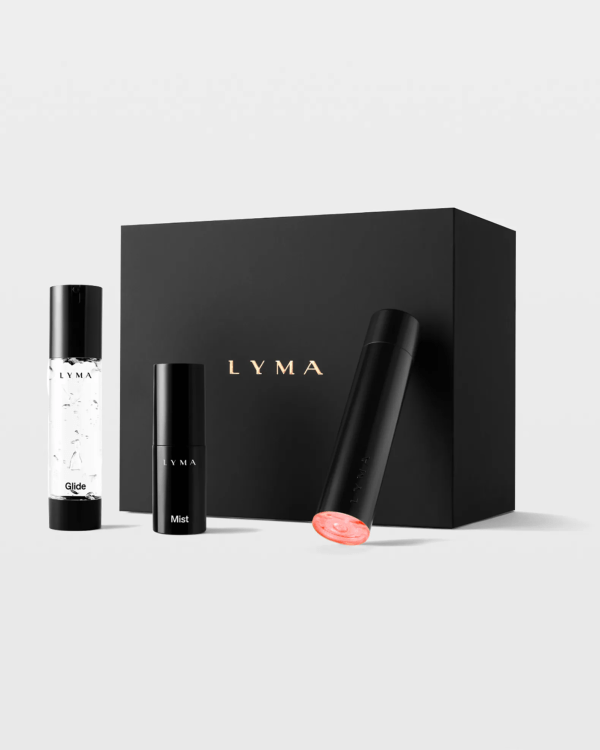
My device arrived in quite possibly the chicest packaging I’ve ever opened: a matte black box with an instructional book—not a paper pamphlet but an entire book. Also included was a USB charging dock, the brand’s Oxygen Mist and Oxygen Glide gel, and a gold membership card that felt like something you’d flash to get into a speakeasy but just activates your laser’s warranty. Very fancy.
The device itself resembles a small flashlight in both look and feel, only instead of a bright beam, a steady red laser glows from the end. It doesn’t buzz, heat up, or make any noise. You just mist your face, apply the glide gel, and hold the laser over each section for three minutes. I focused on my forehead, cheeks, and jawline—so a full routine took about 15–20 minutes.
At first, I didn’t feel much. Actually, I didn’t feel anything. No warmth, no tingling, no temporary tightness like with some LED masks or microcurrent devices. After a few weeks of daily use, I did notice my skin had a slight glow to it—like I had just come from a facial, but subtler.
Now that I’m nearly two months in, the results are… modest, but they’re there if I look closely, which is more than I can say about a lot of other devices on the market. My skin tone looks a bit more even, the fine lines on my forehead and near my eyes are slightly softened, and there’s a touch more firmness along my jaw. It’s not dramatic—and if you’re expecting a total transformation, this probably isn’t it—but it’s definitely an improvement.
I also tried it on a patch of hyperpigmentation on my cheek, which has started to fade, and even used it on a hormonal breakout (risky, I know). To my surprise, it helped calm the inflammation instead of making things worse. That’s one of the perks of cold laser—it’s gentle enough for sensitive and acne-prone skin, and doesn’t trigger post-inflammatory hyperpigmentation.
As Dr. Glass puts it, “Tissue repair begins from the first use, with most noticing a glow within weeks and full results appearing around the 12-week mark.” I’m not quite there yet, but based on what I’ve seen so far, I can say this: while it’s not a miracle cure, it’s a promising tool if you’re in it for the long game and promise yourself to use it consistently.
Final Thoughts
So, is the Lyma Laser worth the nearly $3,000 price tag? It depends. If you’re someone who’s dedicated to your skincare routine, wants long-term results, and doesn’t want to deal with needles, redness, or downtime, this is a very compelling alternative to in-office laser treatments.
“The LYMA Laser, whilst a significant investment, is a hospital-grade product in the palm of your hands,” says Dr. Glass. “After treating clients for decades, I can assure you, you never regret investing in your skin.” It’s not a quick fix, and it’s definitely not a casual purchase. But in a world where a single in-office laser session can cost $1,500 or more—and where downtime can derail your week—the idea of a damage-free, do-it-yourself treatment that actually works feels like the future. If you’re willing to commit the time, the Lyma Laser might just be your skin’s new secret weapon.