Anna Sui’s Barbie Doll Is a Rebellious Nod to 90s Grunge & Boho Chic
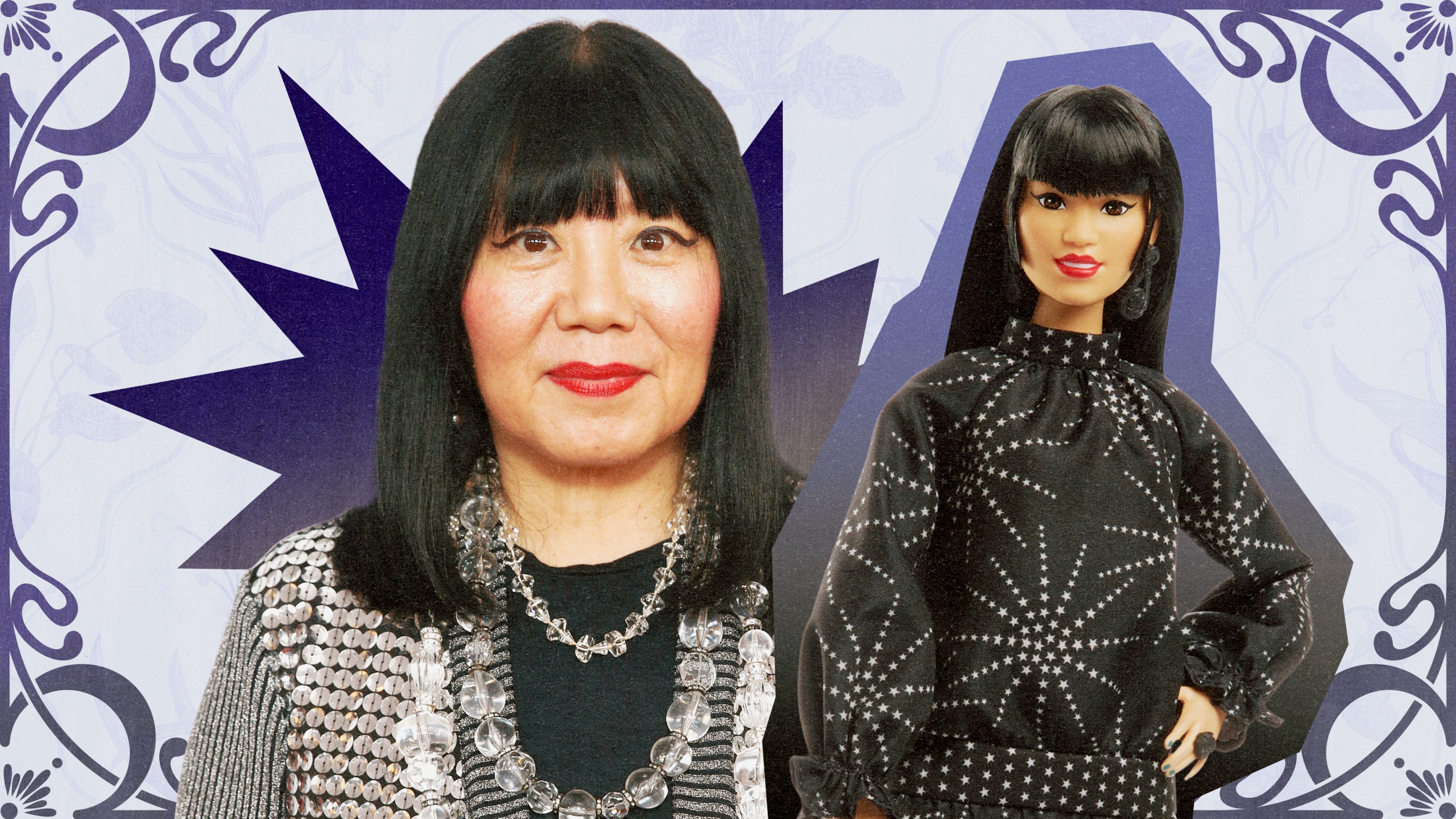
Anna Sui is in her dollhouse era. The legendary designer, a first-generation Chinese American who helped define the 90s grunge aesthetic, has officially teamed up with Mattel to release a Barbie in her likeness.
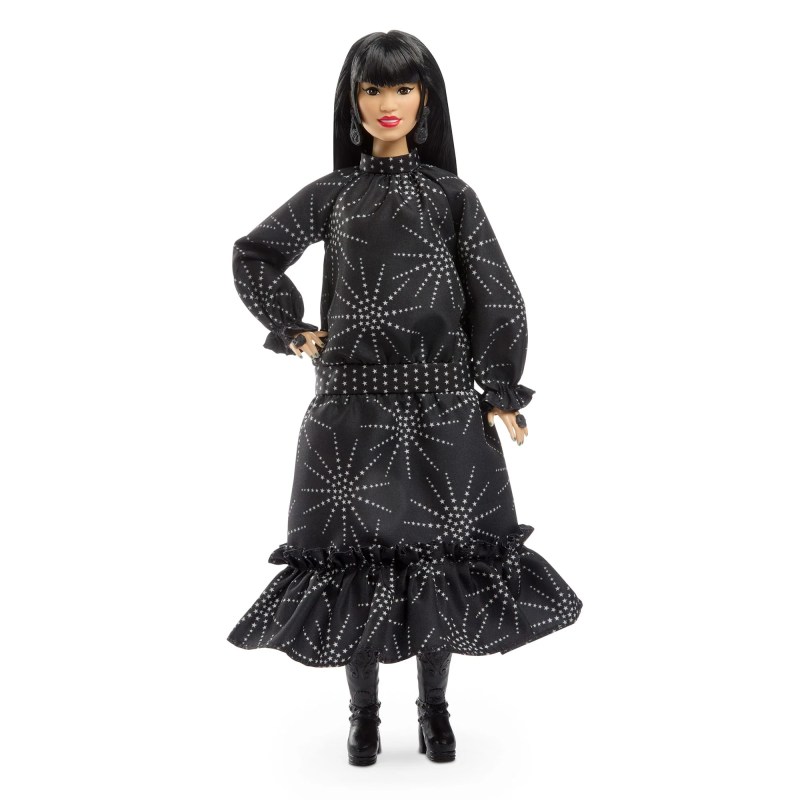
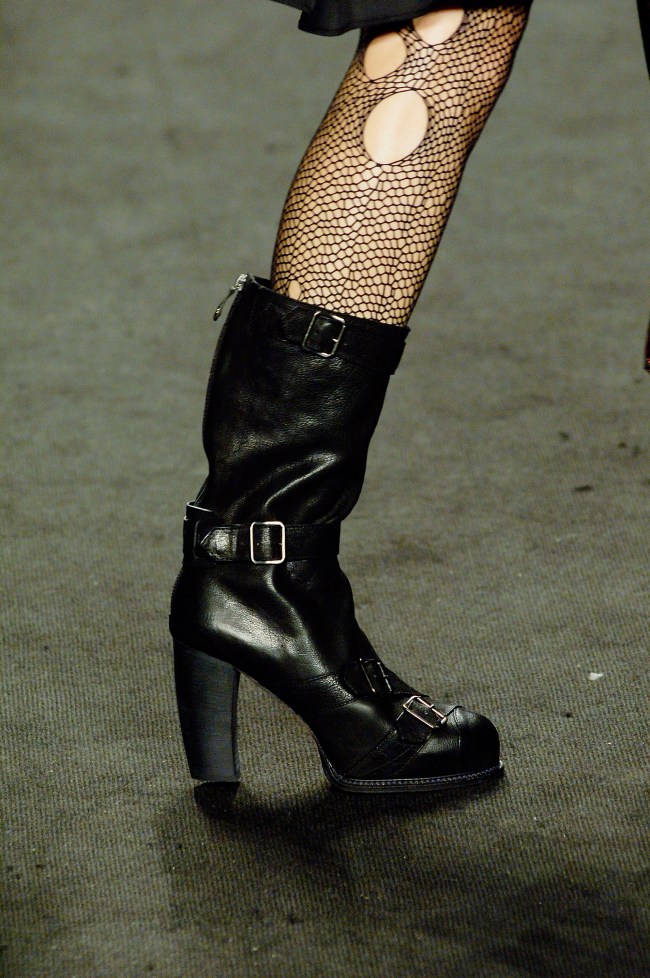
In true Anna Sui fashion, the doll has a rebellious, romantic, and bohemian style, dressed in a star-print dress and chunky heeled boots–a nod to an iconic look from the designer’s 2007 collection. Of course, the doll also wears a bold red lip and bright green nails, and carries accessories inspired by Sui’s own signature pieces, including a pair of sunglasses from her 2005 collection, and a mini perfume bottle from her namesake fragrance, Anna Sui Classic Eau de Toilette.
In celebration of Asian American Pacific Islander Heritage Month, the doll launch is part of Barbie’s “Inspiring Women” collection, honoring various heroines throughout history. Past awardees include Maya Angelou, Dr. Jane Goodall, and Kristi Yamaguchi.
“I’m a total Barbie nerd,” Sui tells me over Zoom. “I grew up playing Barbie. Barbie was like such an inspiration for me, and when they came to me with this honor–the series, Inspiring Women–I was just walking on cloud nine. I called my mom right away. And so I think that, it’s really, really incredible that I’m able to share my inspiration and my kind of life goals with other women now and talk about it and it’s so well-symbolized in this product.”
StyleCaster caught up with Sui, where she talks her collab, the state of representation in fashion, and her go-to music when designing, below.
The Anna Sui Barbie is such a rich reflection of your style. How did you land on the design for this doll?
Well, I think the Mattel team was so great because they’re the ones who pointed out all these accessories, and I actually sent close up photos of my jet earrings and my rings. They did my eyeliner perfectly, as well as the red lipstick, the green nail polish, and the accessories–like the boots–which were from my spring 2007 collection. Every detail was exactly like those boots, and the print dress is actually one of my favorite dresses, and we did it in the style of the dresses that I wear. I tend to like that kind of Victorian look, and I think that they captured it so perfectly.
Barbie is often seen as aspirational. What do you hope for when young people see this doll?
Well, when I think back to when I was playing with Barbie, it was totally aspirational. I mean Barbie, to me, was always a career gal, and that’s what I became. She always was very interested in fashion, which was kind of the thing that helped me link up what I needed to know about fashion. And I was talking to a friend of mine and saying, “You know that there was even a Barbie fashion designer outfit at one point where she carried a portfolio and she wore a business suit.” And of course, those business suit days are gone. But, I mean, I was always very proud of my portfolio that I put together when I went to Parson’s so I think there were so many things that kind of gave me a guideline. And I’m hoping that this Barbie will do the same for other young women, you know, showing them that you can stick true to your own style and really follow your own beliefs and your own intuitions. I think that’s really the way you accomplish what you want, you know, just really sticking to your own beliefs.
This collaboration is tied to AAPI Heritage Month. What’s one moment in your career where you really felt the weight of representation?
I really think all through my career. I mean, you know I’m old enough to remember when most of the designers were men. Most of the working force in the clothing business were men, and I was part of that generation. That kind of broke through. I broke through as an Asian American. And again, there weren’t a lot of Asian Americans working in the Garment Center at that point, but through the years, it became kind of a dominant force, especially once we started producing more in Asia. It made such a difference. And I think now if you look at the workforce in the New York area, I think, it is predominantly Asian.
Do you feel like the fashion industry has gotten better at showcasing Asian American talent?
I mean, it was so exciting when there was that whole surge of Chinese American designers and Asian American designers. And I think that people were showcased amongst that–that group that came out about 10 years ago, I believe. I think that now it’s almost like standard and the norm, and again, as I mentioned, in the workforce in the Garment Center here, it’s just predominant.
If someone new to fashion was exploring your work for the first time, what collection or piece would you point to them as peak Anna Sui?
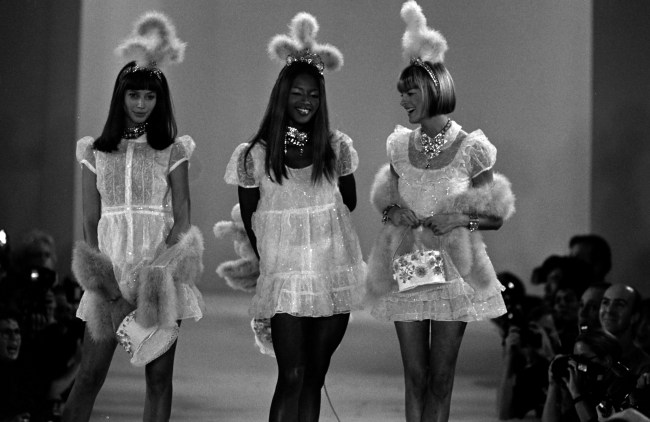
I think when people think of Anna Sui, they think of the Baby Doll. They think of that incredible moment when the Supers–Linda, Naomi, and Christy–stopped on the runway in their baby doll dresses. And those pieces now live at the Metropolitan Museum of Art. And I think that almost every time people talk about my fashion, there’s always a reference to that.
Your designs helped define the 90s grunge aesthetic. What do you think makes that aesthetic so timeless?
Well, I think it was such an exciting period of time in my life and in my career, and I think that people are going back to it because it was such a genuine time. It’s before there were paid influencers coming to your show, it was usually very organic, where I’d be out at a club or at a party and run into somebody and say, ‘Oh, do you want to come to my show?’ It would be the boyfriends of the models, and they’d ask if they could invite them to the show. And it was just, very organic, the way we got our audience. Not only was there fashion press and fashion buyers, but there were all these people that were just genuinely interested in the scene. Lots of young Hollywood would be in town for New York Fashion Week, and they loved going to fashion shows. So I think that people understand, like, what a much more organic time that was. And the same with the fashion, with the promoting of style. There was a whole kind of ecosystem of press supporting designers and stores supporting designers, where in the last 25, 30, years, it’s kind of turned almost into such a big business that it’s all generated by too much synthetic force behind it, rather than organic force. The press is bought, the influencers are bought. And it’s a different time, You know? I mean, I’m not looking down on it, it’s just changed. But I think that people, when they look at the 90s, they see that actually, it was very, very genuine.
What 90s trend would you want to see make a comeback?
Well, I think a lot of them have already made the comeback, the slip dress, certainly the tiara. I think that a lot of dressing with like little cardigans and and slip skirts and anklets with Mary Janes and all that was a very 90s sort of look. So I think that a lot of people were missing that or wanting to participate in that look again, or for the first time. And I think that maybe the most exciting thing is, like the whole boom of vintage, because back then, I think vintage was so big because none of us had any money. We all went to the flea market and bought things, and I think that it was not as common back then. I remember my mother was upset that I was wearing secondhand clothes. But now I think it’s such a great statement that so many people are interested in vintage, and I think that now you can kind of score exactly what you want, whereas it used to be, you had to come upon it, you had to discover it, you had to be lucky. And now you could just sweep the internet and you’ll find exactly what you’re looking for.
So much of Gen Z is focused on discovering their own personal style. What advice you would give to someone who’s on their own style journey?
Well, I know I always had pictures of all my idols and heroes up on my wall, and we tried to emulate what they were wearing, trying to figure out like, when it was like a rockstar girlfriend, where did she get her dress? Where did she get her shoes? And try to find similar things like that. I think that, you know, there’s nothing wrong to aspire to your idols, and I think studying how they dress kind of teaches you how to dress. I think a lot of my style comes from my mother too, and how she would put things together, and especially when she was getting ready to go out at night, she’d always have, like, a great little handbag and beautiful shoes, and she’d wear more jewelry than she normally would, you know, so it was just things that in observation. And I think that the other thing that you keep in mind is that the first thing people see about you is what you’re wearing. And I think when you keep that in mind, you use that as a kind of a silent vocabulary where you can give off your messages that you’re trying to get across. That’s part of the fun of it,
What’s been inspiring you lately?
Well, I mean, everyone knows that I love music, and I think it’s been such an exciting time in music. There’s been so many female singers that are really, really taking the forefront. And, you know, one of the biggest thrills in the last couple years is the fact that Olivia Rodrigo was wearing my clothes, and recently, Chappell Roan had borrowed some things, and Ariana Grande. And it’s just kind of so exciting that there’s this whole new generation of very talented, stylish people that are interested in my fashion.
How would you say your relationship with style has changed over the decades, both as a designer and an individual?
Actually, I kind of think it hasn’t changed much, because I kind of gravitate always to the same things. When I wake up for the morning, I’m looking online, shopping on The Real Real or Etsy or eBay, or Vestiaire, you know, like looking for things that maybe I missed the first time around. And that was kind of what I did when I was going to flea markets too. Like I really felt I missed out on the whole like, British Fashion boom that happened in the 60s. So I would always be looking for that style when I was going through flea markets. It’s kind of the same quest now, I’m finding those pieces that maybe that I missed in the 70s, the 80s, the 90s, you know, like looking for all those things, and the amazing thing is that you can actually find it. You’re not just randomly coming across it.
You mentioned you’re very into music. What’s your go to soundtrack when you’re designing a new collection?
As much as I like new music, I feel that if I’m like trying to get myself in a creative mood, I put on The Cure. I actually saw them in concert last year at Madison Square Garden, and it was the first time I saw them in concert. It was so thrilling to actually see them live, and they sounded incredible. So if you look back my first show, the opening song was “The Lovecats.” I discovered them late in at that point–a friend of mine told me, ‘Oh, I think you’re gonna really like this band.’ They’re from the 80s, and this was during the 90s. And after I heard that first song and fell in love with “The Lovecats,” it’s just been kind of my go-to for when I want to get myself in a good mood.