Reformation’s Yael Aflalo Shares Her Top 8 Green Fashion Tips


Reformation’s mission to become a cool-girl fashion label without a carbon footprint happened by chance. “I had just gotten a Netflix account and began watching a lot of documentaries,” founder Yael Aflalo told us. “I became very interested and concerned about the environment. At the same time I was making clothes. I didn’t really realize the correlation between the fashion industry and environmental issues.”
Around the same time, she had an unexpectedly life-changing dinner party. “This woman came over and starting asking me how I felt about the impact from fashion on the environment and how I felt about labor and ethics. I didn’t have an answer, because I had never thought about it.”


Since then, Reformation as a label has grown exponentially in its quest to become eco-friendly and chic. Besides creating pieces that instantly sell out and have waiting lists, its New York City stores have been frequented and shopped by Karlie Kloss and Rihanna. And the pieces look nothing like the typical earth-friendly fashion. Think: sleek cropped jumpsuits, affordable striped tees and of-the-moment slip dresses or bombers embroidered with slogans such as “not your baby.” They also sell an entire wedding collection–and each new release is added to mini collections, a few of which are currently dubbed “It’s Not Us – It’s You” and “Keep That Effortless Thing Going.”
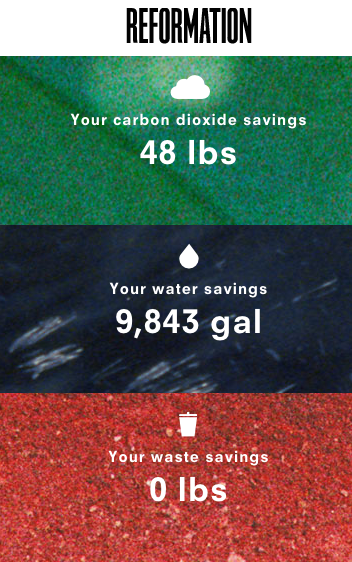
The label’s latest project is a personalized “Ref Scale,” which allows each shopper to see how much carbon dioxide, water, and waste you’ve saved in pounds by shopping at Reformation.
In honor of Earth Day today, we sat down with Yael to get her tips for being more sustainable when it comes to fashion.
Repurpose your vodka stash
A great (and eco-friendly) way to remove odors from clothes without washing or dry cleaning them is to spritz them with vodka. Yael recommends mixing vodka and water in a spray bottle, about a 60/40 mix, and liberally spraying it on the garment. The vodka dries odorless, kills bacteria, and removes any smells as it evaporates.
When in doubt, shop vintage
“Reformation originally started as an idea where we would take vintage clothes and refit them,” says Yael. Likewise, shopping vintage is one of the easiest ways to have less of a footprint and be more sustainable. “Anything vintage is just better. When you’re buying vintage, it has a zero footprint.”

Avoid cotton and synthetics
“Cotton is really bad for the environment,” says Yael. “It’s almost unavoidable to buy cotton, so just be thoughtful about it.” Similarly, Yael says to avoid synthetic fabrics such as rayon and polyester. “They’re made with oil, which is very bad for the environment–they don’t biodegrade.” Yael equates avoiding these fabrics to Meatless Monday, since they’re so hard to avoid, try not to buy these fabrics every day.
Look for fabrics like Tencel and linen
Yael says that making choices to switch your fabrics up can really make a difference. For example, alpaca is much more environmentally friendly than cashmere. Also, linen, which comes from the flax plant is much better for your footprint than cotton and also uses a lot less water to produce. Tencel (which Reformation uses in a lot of designs) is a fabric regenerated from wood cellulose. Recycled cotton and polyester fabrics are also better for the environment.

Use your freezer to clean your jeans
This one is often contested, but the Reformation team says reduces the amount of water and energy you use and keeps your jeans from fading and shrinking. Place your folded jeans in the freezer overnight. The cold temps help kill bacteria and keep your jeans fresh. Take them out in time to allow “defrosting” before wearing them again.
Use cold water when washing your clothes
Yael explains that using cold water, air drying, and washing completely full loads will have a crazy dramatic impact on an individual’s environmental footprint. “Two-thirds of our environmental impact as an individual occur after we’ve bought the item and when we’re washing it.”

Recycle your clothes
Whether it’s giving them away to the YMCA or dropping them off to other charities, Yael says this is a great way to reduce your footprint. “Americans don’t recycle their clothing,” she says. “They throw them out. but 98 percent of clothing can be reused again.”
Your unlikely suede cleaner is cheaper than you thought
Yael says stale bread is perfect to spot-clean suede. Remove the crust and leave the bread out until it becomes dry and hard. Then, gently rub the stale bread against the stain like an eraser. The dirt and stains will disappear.