The Actual Difference Between Lab-Grown vs. Natural Diamonds—& Which One You Should Be Shopping This Year


All products and services featured are independently chosen by editors. However, StyleCaster may receive a commission on orders placed through its retail links, and the retailer may receive certain auditable data for accounting purposes.
Lab-grown diamonds have been trending for a number of reasons. First, they’re optically, chemically, thermally, and physically identical to natural diamonds. Second, they are are quite literally a fraction of the cost of natural diamonds, making them a much more accessible option.
But if you’re still not convinced on making the switch, or just want a little more info on the pros of lab grown diamonds vs. natural diamonds, we have you covered. We tapped experts who can answer all of your most frequently-asked questions about the lab grown diamond trend, so you can figure out if going this route is for you.


What Are Lab-Grown Diamonds?
Lab-grown diamonds are engineered diamonds that are created in lab environments that replicate natural diamond formulations. According to Pandora’s website, “these lab created diamonds consist of actual carbon atoms arranged in the characteristic diamond crystal structure.” Because they are made from the same materials as organically-grown diamonds, they appear identical to the human eye.
How Are Lab-Grown Diamonds Different From Natural Diamonds?
The reason that lab-grown diamonds have an affordable price tag is that they are made in a lab and replicated to appear exactly like natural diamonds. They’re made much more quickly than natural diamonds (2-3 weeks versus 1-3 billion years — and we’re not being hyperbolic).
“There are two ways of producing lab grown diamonds,” says Avi Levy, president of the International Gemological Institute (IGI). “The first is the High-Pressure High Temperature (HPHT) method, where heavy mechanical presses and intense heat are combined to replicate the conditions under which natural diamonds formed. The second is Chemical Vapor Deposition (CVD), a process that superheats gas into plasma, releasing carbon atoms to ‘build’ a diamond crystal at the atomic level.”
Both of these methods grow real, lab-grown diamonds. However, “one process (CVD) assembles the diamond in vertical layers and the other (HPHT) uses a metal catalyst to dissolve component carbon,” says Levy. “These different approaches may produce microscopic inclusions (internal characteristics) which differ from those seen in natural diamonds, but not always. Once polished, both HPHT and CVD produced gemstones look identical to natural diamonds.”
What Are the Pros of Lab-Grown Diamonds?
The biggest pro of lab-grown diamonds has to be the value—you can get more carat for the money, and the price tag is usually far more accessible for many people.
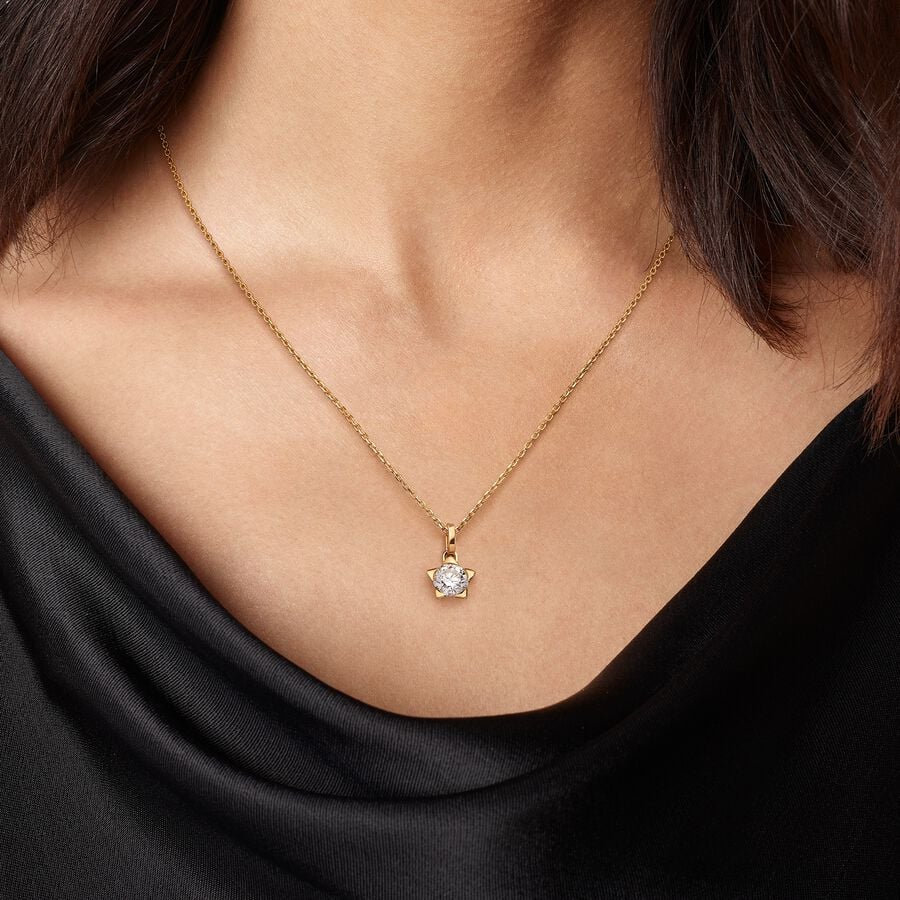
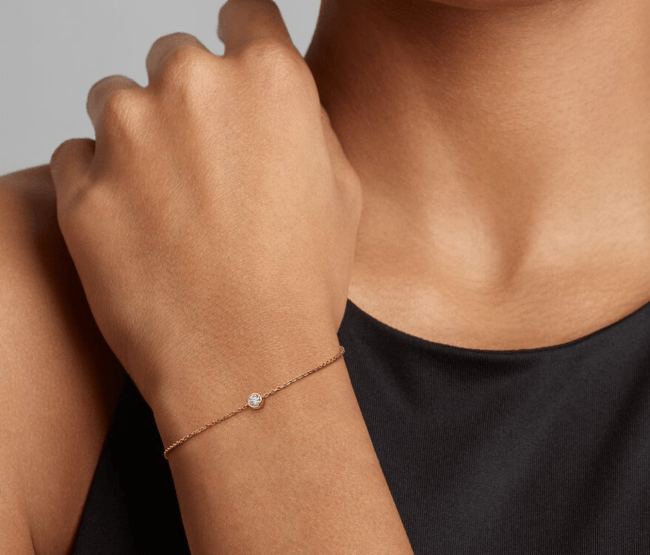
Other reasons you’d be drawn to a lab-grown diamond include their quality and craftsmanship (they are gorgeous and look identical to diamonds). When shopping Pandora’s lab-grown diamonds, know that each stone is individually crafted for color and clarity (every stone is certified across all 4 Cs — a diamond’s grading system — for their incredible designs and quality). They’re also available in multiple carat weights.
Pandora’s lab grown-diamonds are grown, cut and polished using only renewable energy and hand-set in jewelry crafted from 100 percent recycled silver and gold. Essentially, that means that the carbon footprint of a Pandora lab-grown diamond is 95 percent lower than that of a mined diamond of the same size, according to the Pandora website.
Are Lab Grown Diamonds More Durable?
“Because lab-grown diamonds have the exact same chemical compound as a natural diamond, they have the same durability,” says Rustin Yasavolian, CEO of Masina Diamonds. “The only difference is how the diamond crystal is formed, not its the chemical makeup. Lab-grown diamonds are formed mimicking the earth’s process in a machine rather than taking millions of years in the earth.”
Is a Lab Grown Diamond a Synthetic Diamond?
By definition, lab-grown diamonds are synthetic diamonds and are considered technically synthetic because the growing process is synthesized to replicates what is done in mother nature over billions of years. “This is not to be confused with diamond simulant, which looks like a diamond but are not the same chemical compound,” says Yasavolian. “Examples of a diamond simulant would be moissanite or cubic zirconiz, AKA, CZ.”
Can Anyone Tell the Difference Between Lab-Grown Diamonds and Natural Diamonds?
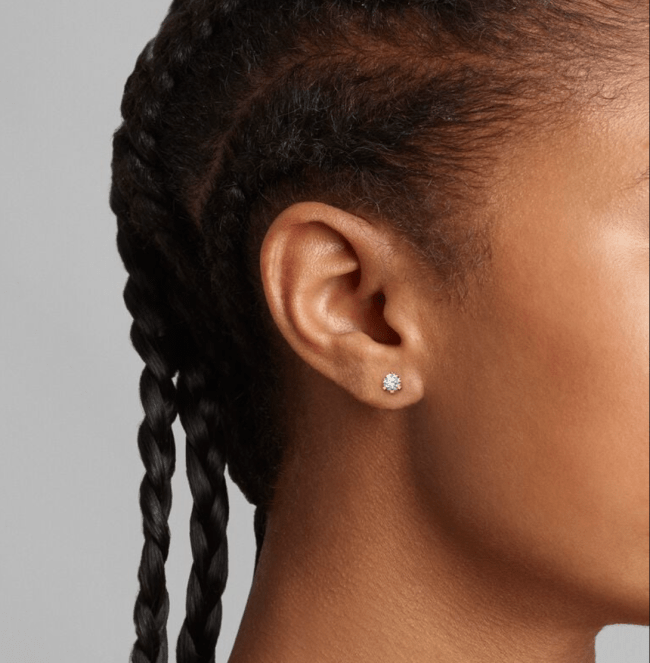
According to both experts, there are no differences to the human eye between lab-grown diamonds and naturally grown diamonds. They are also not different in terms of physical and chemical makeup. Lab-grown diamonds are identical to natural diamonds (and they’re also held to the same standards of quality, aka the 4 Cs). Only advanced testing and skilled experts can tell the two apart.