
What Is the Aurora Borealis?
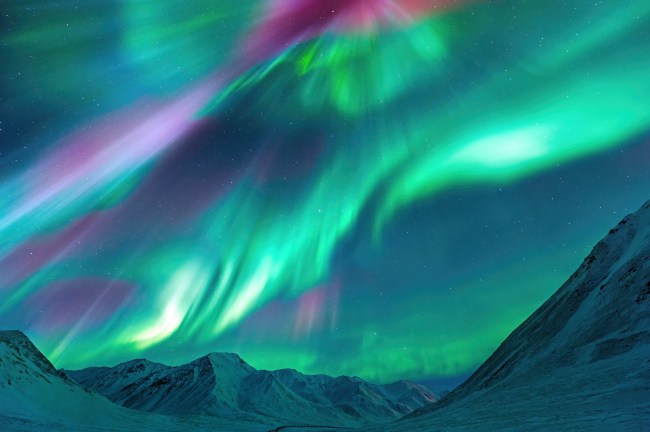
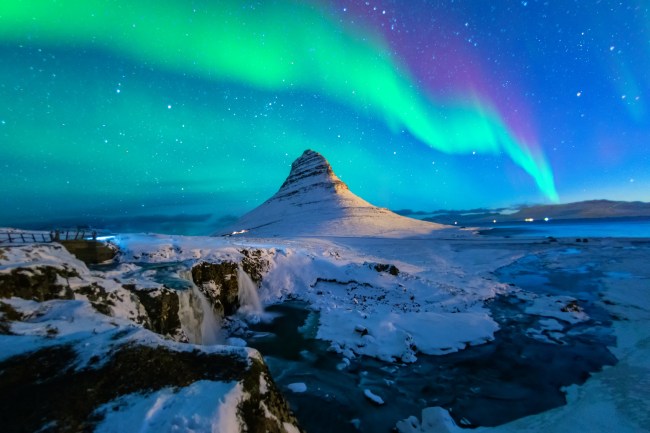
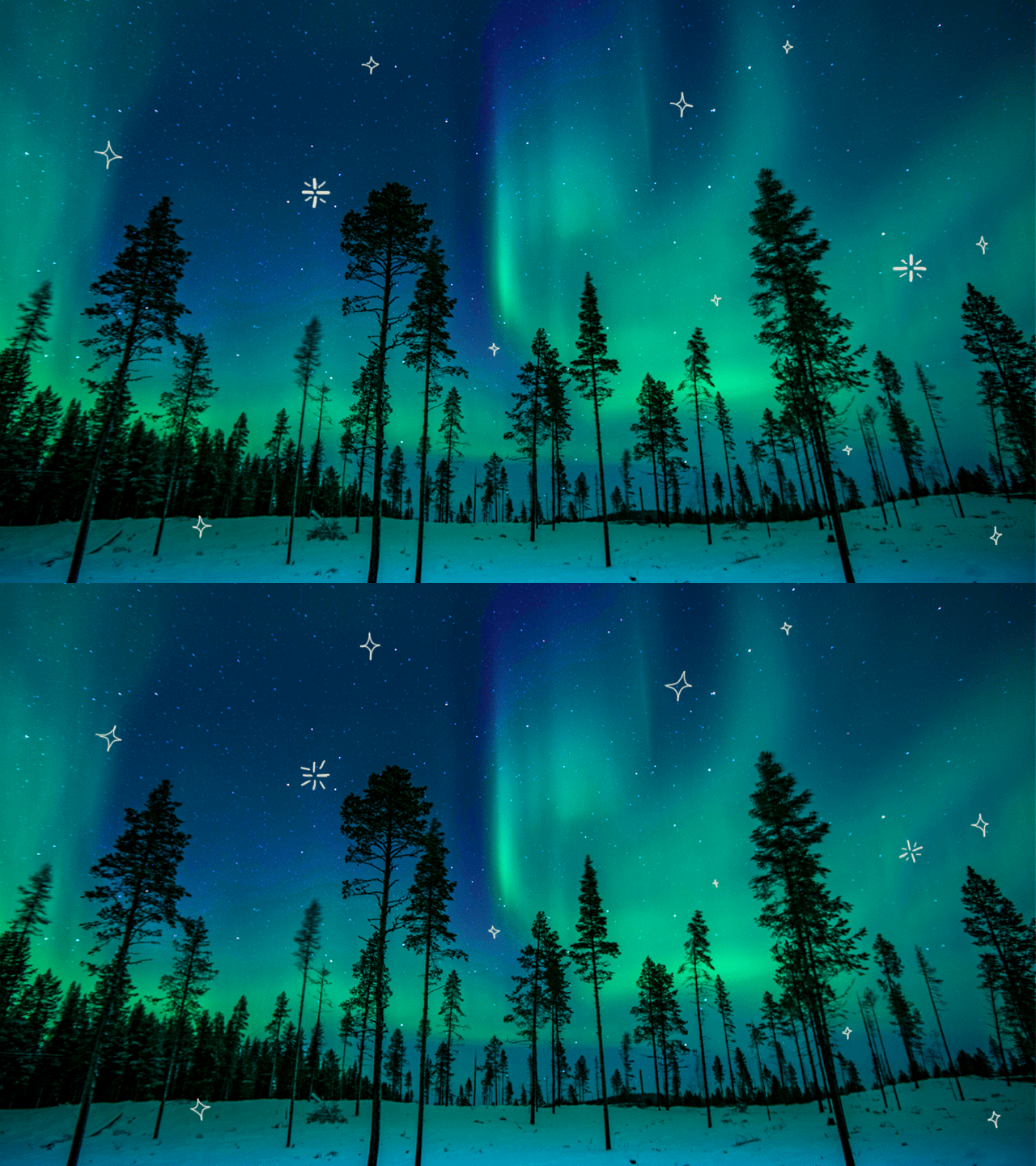
At first, you might think that the aurora borealis is pure magic. But a little science goes into this mesmerizing phenomenon, too. Auroras result from a solar storm’s small electrically charged particles traveling through the Earth’s magnetic field lines and intermingling with gases. The aurora’s colors can change depending on the gases present in Earth’s atmosphere. If the electrically charged particles interact with oxygen, then the auroras will lean toward red and green hues. If nitrogen is present, then the aurora will likely lean toward blue and purple hues.
Typically, the auroras occur near the north and south poles since this is where the solar storm’s particles gather. The closer you are to the poles, the more likely it is to see the auroras. Popular travel destinations that boast northern light sightings include Iceland, Sweden, Canada, and Greenland. A great way to gauge to see if you can witness the northern lights is by using the My Aurora Forecast & Alerts app. The app offers a map that tracks the probabilities of northern lights sightings among other features.
The best time to see aurora borealis is between September to late March, the peak northern light season being the wintertime. It’s recommended to go aurora hunting later in the evening and away from any major cities. Finding a remote place with no other lighting will give you the best chance to see the auroras in all of their glory.
However, this past weekend’s sightings were an incredibly unlikely event. The unforgettable occurrence is thanks to an unexpectedly powerful solar storm. A rare geomagnetic storm blew when the sun experienced a coronal mass ejection. Coronal mass ejections occur when a massive sunspot erupts on the sun’s corona, resulting in a geomagnetic storm. The geomagnetic storm then releases the supercharged particles that interact with the Earth’s atmosphere, giving us heightened aurora sightings. Without the geomagnetic storm, we may have never seen auroras as far south as we did this past weekend!